Debugging Phantom Redis Outages on GKE
518 Redis outages in 7 days. Zero CPU spikes. Zero restarts. Zero alerts from monitoring. Each incident lasted only a couple of seconds, and they all happened on one GKE node.
And yet, every few minutes, Redis disappeared - while everything else looked perfectly normal.
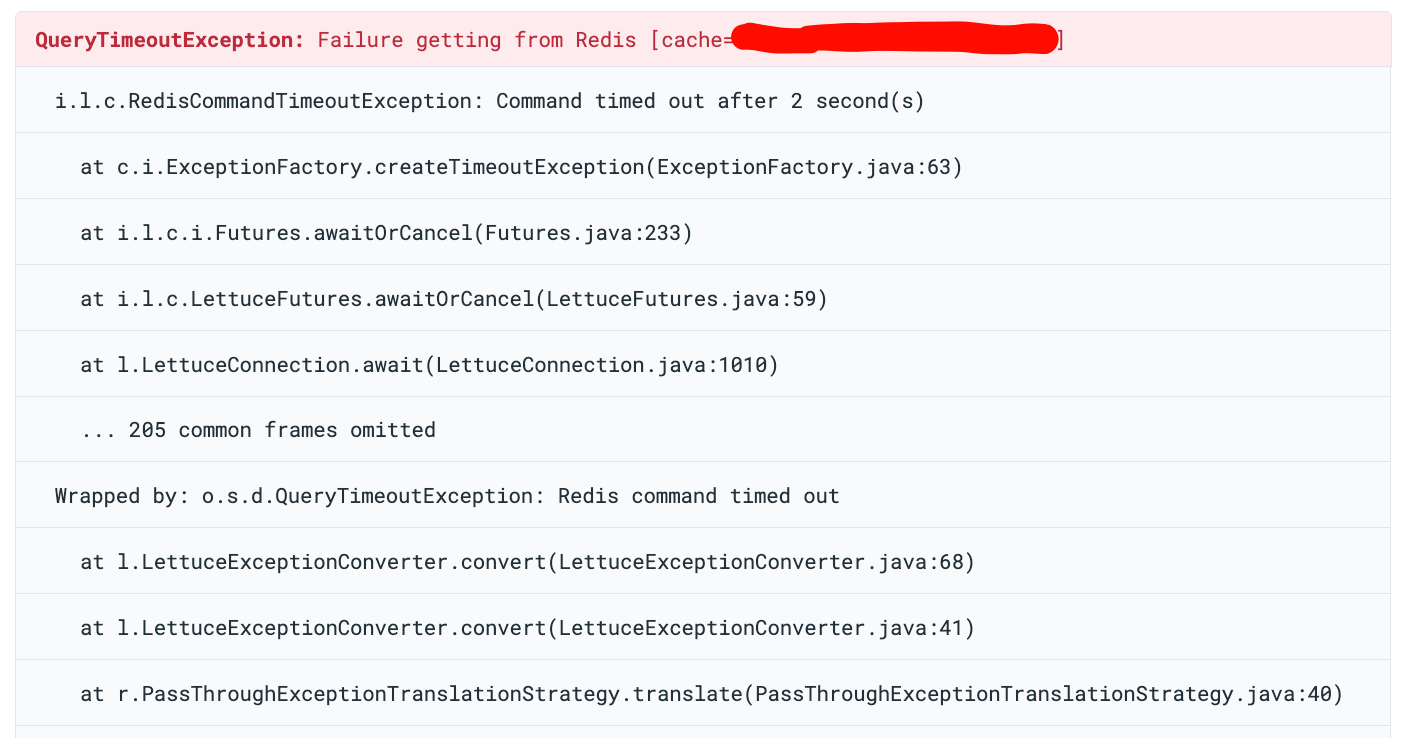
This post explains how we debugged a system that was failing without failing - and the simple config changes that fixed it.
TL;DR
- Redis was not overloaded or crashing
- GKE shared-core (E2) nodes caused ~2-second CPU freezes, invisible to standard metrics
- HAProxy had
checkFall: 1- one missed health check = server marked DOWN = outage - Two clusters had no resource requests (BestEffort QoS), making them worse
- Fix: set
checkFall: 3, add resource requests, give HAProxy its own CPU - Result: HAProxy outages (“no server available”) dropped to zero. Individual command timeouts still happen during E2 CPU stalls - the real fix is migrating to dedicated-core VMs.
Our Setup
We run a logistics SaaS platform. Redis powers our session caching, tracking, risk scoring, and more. We have six separate Redis HA clusters on Google Kubernetes Engine, using the DandyDeveloper redis-ha Helm chart (v4.35.x).
Each cluster has this architecture:
Java, Spring Boot, Lettuce"] svc_python["Service B
Python, FastAPI, aiocache"] other_apps["other services..."] end end subgraph usc1["GKE Cluster: Data"] subgraph redis-pool["Node Pool: redis (3x e2-standard-4)"] subgraph ns-a["Redis Cluster A (x1 of 6)"] ha-a["HAProxy
2 replicas"] subgraph pod-a["redis-ha-server (x3)"] r-a["redis"] s-a["sentinel"] sb-a["split-brain-fix"] e-a["exporter"] end ha-a -->|tcp-check| pod-a end subgraph ns-b["Redis Cluster B (x1 of 6)"] ha-b["HAProxy
2 replicas"] subgraph pod-b["redis-ha-server (x3)"] r-b["redis"] s-b["sentinel"] sb-b["split-brain-fix"] e-b["exporter"] end ha-b -->|tcp-check| pod-b end end end end svc_java -->|"Internal LoadBalancer
port 6379 / 6380"| ha-a svc_python -->|"Internal LoadBalancer
port 6379"| ha-b style redis-pool fill:#2d1f1f,stroke:#e74c3c,stroke-width:2px style ns-a fill:#1a1a2e,stroke:#e74c3c style ns-b fill:#1a1a2e,stroke:#e74c3c
Six Redis HA clusters share a single 3-node pool - over 100 containers on just 3 shared-core VMs. Only two clusters shown for clarity.
HAProxy runs TCP health checks against Redis and sends traffic only to the current master. Sentinel handles leader election and failover. Clients do not need to know about Sentinel - they connect to HAProxy’s service IP, and HAProxy routes them to the right node.
All six clusters were deployed through ArgoCD from a single GitOps repository, running on a dedicated pool of just 3 GKE nodes.
The Incident
Application logs showed RedisCommandTimeoutException in our Java services. Our services have a fallback: when Redis is
unavailable, they fall back to the database for all operations. So users did not see direct errors - but each Redis
timeout meant extra database queries, higher latency, and more load on PostgreSQL. At scale, this fallback quietly
turned a Redis problem into a database pressure problem.
The Red Herring: Blaming the Java Client
Our first idea was that the problem was in the application. The RedisCommandTimeoutException came from Lettuce,
the Redis client in our Spring Boot service. The obvious guess: our connection pool was misconfigured.
One reason we started here: we had almost no visibility into HAProxy. At that point, we were not collecting HAProxy
logs in a structured way. The HAProxy pods were running, but their logs were not being shipped to our logging system. We
could only see the application-side errors - RedisCommandTimeoutException in Sentry - and those pointed at Lettuce.
Without HAProxy logs, we had no way to see the “no server available” warnings or the DOWN/UP events. As far as we could
tell, the problem was between the application and Redis, not in the proxy layer between them.
So we tuned Lettuce - checked pool size, timeout settings, thread dumps, connection leaks. Nothing was clearly wrong.
Then we noticed: all traffic was going to the single Redis master. The two replicas were idle. We turned on the * HAProxy read port* to move read traffic to replicas.
This should have reduced the load a lot. But the errors kept coming.
A Redis instance handling only writes, with plenty of spare CPU and memory, should not time out for 2 seconds. The problem was not about Redis being overloaded. That is when we stopped looking at the application and started looking at the infrastructure. One of the first things we did was set up proper log collection from HAProxy - and that changed everything.
The Discovery: HAProxy Speaks
Once we started collecting logs, we finally saw what was happening. HAProxy logs across multiple Redis namespaces showed:
[WARNING] bk_redis_master has no server available!
[WARNING] Server bk_redis_master/R0 is DOWN, reason: Layer7 timeout,
          check duration: 2003ms. 0 active and 0 backup servers left.
[ALERT]   backend 'bk_redis_master' has no server available!
[WARNING] Server bk_redis_master/R0 is DOWN, reason: Layer7 timeout,
          check duration: 2004ms. 0 active and 0 backup servers left.
[ALERT]   backend 'bk_redis_master' has no server available!
[WARNING] Server bk_redis_master/R0 is DOWN, reason: Layer7 timeout,
          check duration: 2005ms. 0 active and 0 backup servers left.
[ALERT]   backend 'bk_redis_master' has no server available!
Over 7 days, we counted 518 DOWN events across five of six clusters:
| Cluster | DOWN Events |
|---|---|
| Redis cluster A | 394 |
| Redis cluster B | 68 |
| Redis cluster C | 48 |
| Redis cluster D | 5 |
| Redis cluster E | 3 |
Cluster A alone had 76% of all failures. This confirmed the problem was not inside the application—it was in the connectivity layer.
The Investigation
Clue #1: Multiple Clusters Failing at the Same Time
At one timestamp, three separate Redis clusters - A, D, and C - all had health check failures in the same one-second window. We found 16 such windows where multiple clusters failed together. The most common pair was clusters C + B, with 19 events at the same time.
When independent clusters fail at the exact same moment, the problem is not inside Redis. Something outside is affecting all of them at once.
All three events below happened on the same node, within one second of each other:
18:37:47.304 [cluster-a] Server R0 is DOWN, reason: Layer7 timeout,
             step 9 of tcp-check (expect '+OK'), duration: 2028ms
18:37:47.654 [cluster-b] Server R2 is DOWN, reason: Layer7 timeout,
             step 7 of tcp-check (expect 'role:master'), duration: 2014ms
18:37:48.338 [cluster-c] Server R0 is DOWN, reason: Layer7 timeout,
             step 5 of tcp-check (expect '+PONG'), duration: 2097ms
Three independent Redis clusters, three different tcp-check steps, all failing at the same moment on the same node.
Clue #2: One Node Caused Most Failures
We mapped every DOWN event to its GKE node:
| Node | DOWN Events | Percentage |
|---|---|---|
| Node 1 | 403 | 78% |
| Node 2 | 88 | 17% |
| Node 3 | 27 | 5% |
78% of all failures came from one node. The problem was node-local.
Clue #3: Health Checks Timing Out at Exactly 2 Seconds
The health check durations:
2001ms, 2003ms, 2005ms, 2097ms, 2291ms, 2500ms
Every failure was around the 2-second timeout limit. The failures happened at different tcp-check steps - AUTH,
PING, INFO replication, QUIT. The whole Redis process was frozen, not just slow on one command.
Server R0 is DOWN - step 3 (expect '+OK')        - duration: 2003ms
Server R0 is DOWN - step 5 (expect '+PONG')       - duration: 2004ms
Server R0 is DOWN - step 7 (expect 'role:master') - duration: 2002ms
Server R0 is DOWN - step 3 (expect '+OK')         - duration: 2018ms
Server R1 is DOWN - step 5 (expect '+PONG')       - duration: 2500ms
Server R0 is DOWN - step 5 (expect '+PONG')       - duration: 2291ms
Server R2 is DOWN - step 7 (expect 'role:master') - duration: 2014ms
Server R0 is DOWN - step 5 (expect '+PONG')       - duration: 2207ms
Step 3 is AUTH, step 5 is PING, step 7 is INFO replication. The freeze hits at random points in the health check -
because the whole Redis process is frozen.
Clue #4: Instant Recovery
Every DOWN was followed by UP within one second:
18:37:47 [WARNING] Server bk_redis_master/R0 is DOWN,
         reason: Layer7 timeout, check duration: 2003ms.
         0 active and 0 backup servers left.
18:37:47 [ALERT]   backend 'bk_redis_master' has no server available!
18:37:48 [WARNING] Server bk_redis_master/R0 is UP,
         reason: Layer7 check passed, check duration: 3ms.
         1 active and 0 backup servers online.
DOWN at 2003ms, UP at 3ms - one second apart. Redis was not crashing. It froze for about 2 seconds and then worked perfectly.
Clue #5: Monitoring Showed Nothing
We looked at Node 1 during the failure window:
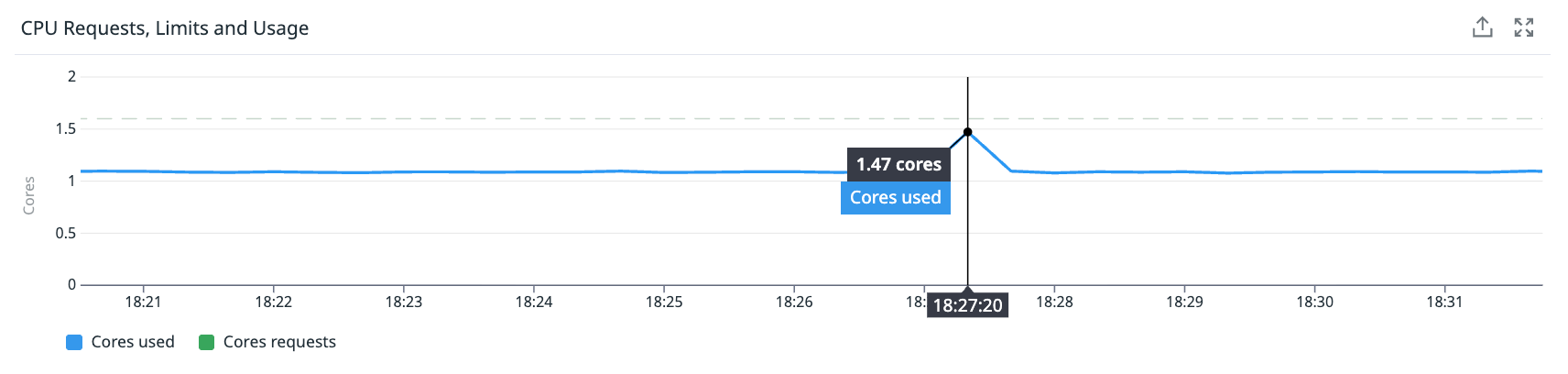
- CPU usage: Steady at 55-60%. No spike.
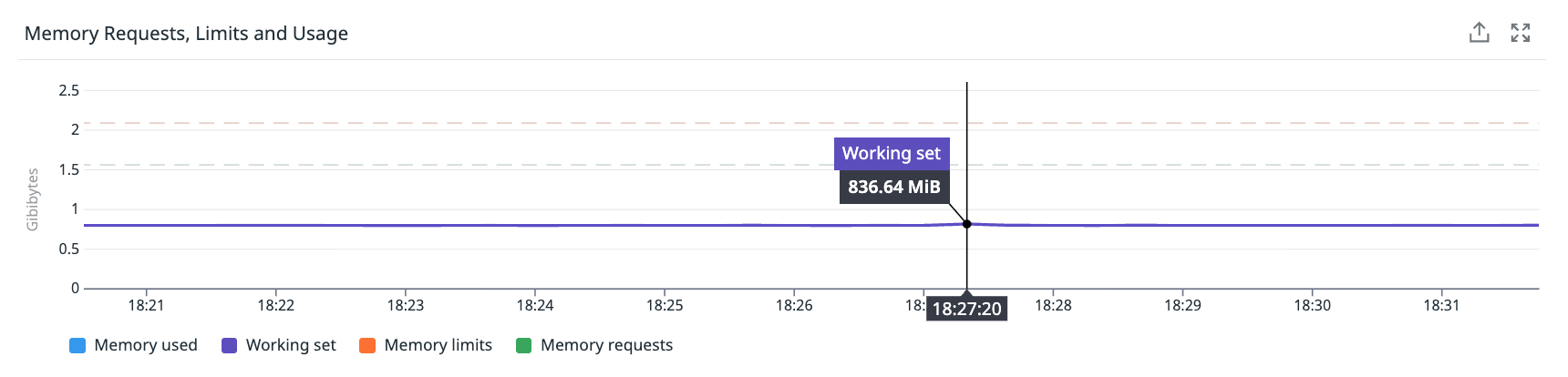
- Memory usage: Steady at ~50%. No change.
- Network: Flat.
- Container restarts: Zero.
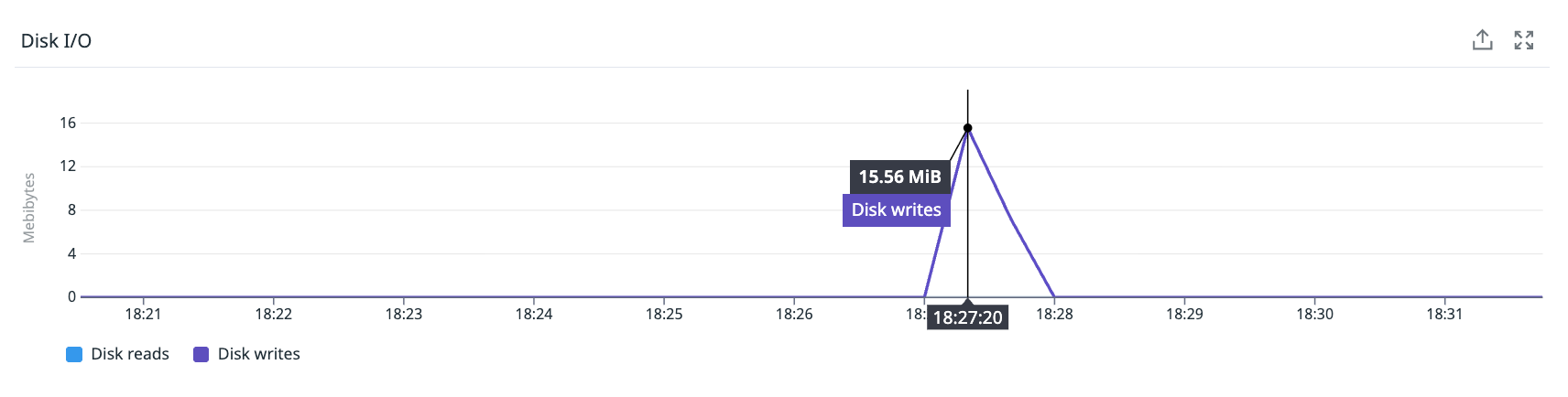
The only unusual thing: a disk I/O spike of ~2 MiB writes about 13 seconds after the failure - consistent with an RDB background save finishing.
How can a node have 518 outages and show nothing? Because a 2-second freeze in a 60-second metric window is only 3.3% of the interval. Standard monitoring cannot see it. We call these “sub-metric failures” - events too short for aggregated metrics to catch, but long enough to cause real errors.
Root Cause
We found two types of causes: the trigger (what causes the freezes) and the amplifier (what turns short freezes into user-visible errors).
Primary cause: CPU steal on shared-core VMs
Our Redis nodes use GCP E2 instances (e2-standard-4). E2 is Google Cloud’s cheapest VM type. Unlike N2 or C2
instances with dedicated CPU cores, E2 shares a physical host with other customers. The hypervisor can take CPU time
away from your VM to give it to other tenants.
This “CPU steal” is mostly invisible in standard monitoring setups unless you explicitly track it (via cpu.steal
metrics, which most teams do not). The kernel does not see it as load, but Redis - being single-threaded - feels it
immediately. A 2-second pause means Redis cannot respond to anything - not health checks, not client commands.
Amplifier: HAProxy checkFall: 1
A 2-second freeze should not cause a user-visible outage. But our health check configuration turned it into one.
The DandyDeveloper chart defaults to checkFall: 1 - one failed health check immediately marks the server as DOWN.
Here is the timeline of what happens:
t=0.0s  HAProxy starts health check
t=0.1s  Node-level CPU freeze begins, Redis stops responding
t=2.0s  Health check times out → server marked DOWN (fall=1)
t=2.0s  HAProxy returns "no server available" to all new connections
t=2.1s  CPU freeze ends, Redis is fine again
t=4.0s  Next health check passes (1ms) → server marked UP
During the DOWN window, every application connection attempt fails. In our Java services, this shows up as
RedisCommandTimeoutException.
With checkFall: 3, HAProxy would need three failed checks in a row before marking the server DOWN. Since our
freezes are short, Redis recovers before the third check, and the application never sees an error.
Contributing factors
- RDB fork() freezes: The chart default
save "900 1"triggers periodicfork()calls. The fork causes a short freeze depending on memory size. - Transparent Huge Pages (THP): Linux’s THP can cause sudden delays when the kernel reorganizes memory. Redis recommends disabling THP in production.
- Too many pods on too few nodes: 100+ containers on 3 shared-core nodes makes resource problems much more likely.
Why some clusters were hit harder: BestEffort QoS
The two worst clusters - A (394 events) and B (68 events) - had no resource requests or limits. Kubernetes put them
in the BestEffort QoS class - no CPU reservation, no scheduling guarantees, and first to be evicted under memory
pressure.
This explains the big gap in failure counts. Clusters with resource requests had some protection. Clusters A and B had none.
You can check the QoS class of any pod with:
kubectl get pod <pod-name> -o jsonpath='{.status.qosClass}'
Our affected clusters returned BestEffort. After adding resource requests, they returned Burstable.
The Fix
Three changes, one GitOps PR:
1. Add resource requests to BestEffort clusters
redis:
  resources:
    requests:
      cpu: 500m
      memory: 512Mi
    limits:
      memory: 512Mi

sentinel:
  resources:
    requests:
      cpu: 100m
      memory: 256Mi
    limits:
      memory: 256Mi

splitBrainDetection:
  resources:
    requests:
      cpu: 50m
      memory: 32Mi
    limits:
      memory: 64Mi

exporter:
  resources:
    requests:
      cpu: 50m
      memory: 32Mi
    limits:
      memory: 64Mi
This moves them from BestEffort to Burstable QoS. They now get reserved CPU and better scheduling guarantees.
We do not set CPU limits on purpose. CPU limits in Kubernetes cause CFS throttling, which can create delays even when the node has free CPU - exactly the kind of problem we are trying to fix.
2. Add HAProxy resources on all clusters
haproxy:
  resources:
    requests:
      cpu: 100m
      memory: 128Mi
    limits:
      memory: 128Mi
If HAProxy does not get enough CPU, it cannot run health checks on time. Then it thinks Redis is down even though Redis is fine.
Note: we initially set the memory limit to 128 MiB. After deploying, Grafana showed HAProxy using 74 MiB - already 58% of the limit. We raised it to 256 MiB to give more headroom. If you are deploying this chart, check your HAProxy memory usage before picking a limit.
3. Raise checkFall from 1 to 3
haproxy:
  checkFall: 3
Now HAProxy needs three missed checks in a row before marking a server DOWN. Short freezes never trigger three failures in a row.
The tradeoff: if a Redis master truly crashes, detection takes ~6 seconds instead of ~2. This is fine - Sentinel failover itself takes several seconds, so the extra delay is small.
Results
The effect on HAProxy was immediate:
- “No server available” events dropped to zero across all clusters
- Real failovers still worked correctly - we verified with controlled tests
The worst cluster went from ~56 HAProxy DOWN incidents per day to effectively zero overnight.
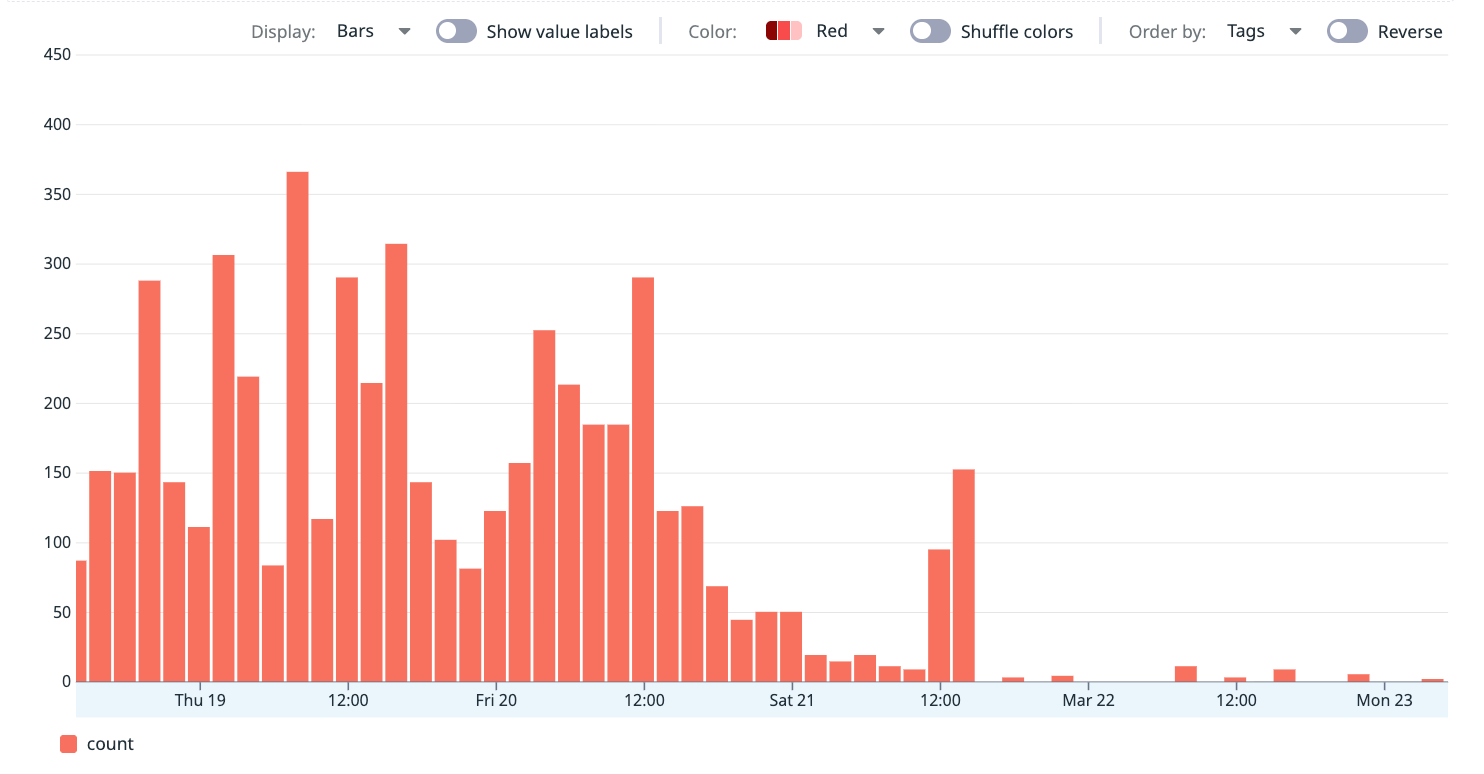
The generated haproxy.cfg confirms fall 3 is active on all server lines:
# backend bk_redis_master
server R0 redis-ha-announce-0:6379 check inter 1s fall 3 rise 1
server R1 redis-ha-announce-1:6379 check inter 1s fall 3 rise 1
server R2 redis-ha-announce-2:6379 check inter 1s fall 3 rise 1
What the Fix Did Not Solve
After deploying, we expected all Redis errors to stop. They did not. HAProxy no longer reported DOWN events, but application logs still showed occasional timeouts.
We confirmed this across two services on different stacks:
- Java service (Spring Boot + Lettuce):
RedisCommandTimeoutException: Command timed out after 2 second(s)- happening in the HTTP filter chain during feature flag checks - Python service (FastAPI + aiocache):
asyncio.TimeoutErrorafter 1-second timeout - bursts of “Timeout error while reading driver token cache”
Both services have correct fallback behavior - they fall back to the database when Redis times out. Users do not see direct errors. But each timeout adds database load and latency.
The reason: checkFall: 3 fixed the amplifier (HAProxy marking the server DOWN and rejecting all new connections),
but it did not fix the trigger (E2 CPU steal causing ~2-second Redis freezes). Commands that are already in-flight
when Redis freezes will still time out - they are already waiting for a response that will not come until the freeze
ends.
Think of it this way:
- Before the fix: A CPU freeze caused HAProxy to mark Redis as DOWN, which broke all connections for several seconds - a full outage
- After the fix: A CPU freeze only affects commands that happen to be in-flight during the freeze - isolated timeouts, not a full outage
This is a big improvement. But it confirms that the E2 → N2 migration is the real long-term fix. The three YAML changes eliminated the worst symptom. The root cause still needs infrastructure changes.
Lessons Learned
These lessons apply to any system with aggressive health checks, shared infrastructure, and latency-sensitive workloads - not just Redis.
1. Standard monitoring hides sub-metric failures - events too short for aggregated metrics to catch, but long enough to break real systems. A 2-second freeze is invisible in 60-second metrics. For latency-sensitive services, you need event-level logs or high-resolution metrics.
2. checkFall: 1 is almost never what you want. It turns any short freeze into a full outage. checkFall: 3 is a
better default for most production systems.
3. BestEffort QoS is dangerous for stateful services. Always set resource requests on Redis, databases, and other latency-sensitive workloads. The scheduler needs this information.
4. Shared-core VMs are risky for latency-sensitive work. CPU steal from the hypervisor is invisible to normal monitoring but causes real application errors.
5. Look for correlation before cause. Independent clusters failing at the same time on the same node was the key clue. It moved us from “what is wrong with Redis?” to “what is wrong with this node?”
6. Always review Helm chart defaults. Community charts are great, but defaults like checkFall: 1 are tuned for
safety, not for production resilience. Always check and adjust them.
Future Improvements
Move from E2 to N2 instances
N2 instances give you dedicated CPU cores. No more CPU steal. The cost increase is ~15-20%, but the predictability is worth it for production Redis.
Disable Transparent Huge Pages
On GKE, THP can be disabled at the node level with a DaemonSet or via GKE’s node system configuration:
echo never > /sys/kernel/mm/transparent_hugepage/enabled
echo never > /sys/kernel/mm/transparent_hugepage/defrag
Disable RDB persistence on cache-only clusters (done)
For clusters used only as caches, we disabled both RDB snapshots and AOF to remove fork-related freezes:
redis:
  config:
    save: '""'
    appendonly: "no"
This eliminates fork-induced stalls for those clusters. Clusters that store important data keep persistence enabled.
Spread pods across nodes
We plan to add topology spread rules so Redis pods are evenly distributed. If one node freezes, it affects at most one pod per cluster:
topologySpreadConstraints:
  - maxSkew: 1
    topologyKey: kubernetes.io/hostname
    whenUnsatisfiable: DoNotSchedule
    labelSelector:
      matchLabels:
        app: redis-ha
Add more nodes
Three e2-standard-4 nodes for 100+ containers is too dense. Adding more nodes would reduce contention and give the
scheduler more room.
Raise health check timeout
We may raise timeout check from 2 seconds to 5 seconds. Real master failures are detected by Sentinel anyway, not by
HAProxy health checks.
Conclusion
What started as mysterious timeout errors turned out to be three things combined: shared-core VMs that sometimes freeze, an aggressive health check default, and missing resource requests. Three YAML changes eliminated the full outages - HAProxy no longer marks Redis as DOWN during brief CPU freezes. But individual command timeouts still happen when commands are in-flight during a freeze. The root cause - E2 CPU steal - needs an infrastructure fix.
The bigger lesson: in distributed systems on shared infrastructure, fixes often come in layers. The first fix removes the worst symptom. The next fix addresses the root cause. And if your graphs are flat but your system is failing, you are looking at the wrong layer. Look one layer below - the scheduler, the hypervisor, the kernel.
We use DandyDeveloper’s redis-ha chart (v4.35.x) with Redis Sentinel, HAProxy, and split-brain detection, deployed via ArgoCD on GKE. Our infrastructure configuration is managed through GitOps with Kustomize overlays and Helm value overrides.